Best Local SEO Tools for Contractors in 2026
- local-seo
- google-business-profile
- contractor-marketing
- seo-tools
If your best jobs still come from referrals, local SEO is the channel that turns nearby demand into calls, quote requests, and booked work. For contractors, the goal is simple: show up when someone in your service area searches "roof repair near me," "furnace installer in Calgary," or "basement contractor open now."
Local SEO is the practice of optimizing a business's online presence to attract customers from relevant location-based searches. It includes your website, Google Business Profile, reviews, citations, location pages, and how search engines understand where your business serves customers.
How We Chose the Best Local SEO Tools
We looked at local SEO tools through the lens of a contractor, not a coffee shop with walk-in traffic. A contractor may have one office, no public storefront, several crews, and a wide local area to cover. That changes what matters.
Here's what we evaluated:
- Whether the tool helps a local business improve visibility across real service areas
- How well it supports Google Business Profile optimization
- Whether it tracks local search rankings by city, postal code, or map grid
- How it manages local citations, local listings, and local business listings
- Whether it helps with online reviews, Google reviews, and review management
- How useful it is for multi-location businesses or companies with more than one location
- Whether pricing makes sense for small to mid-size Canadian contractors
The mobile piece matters too. Most local searches happen on mobile, leading directly to immediate actions like directions or phone calls. For mobile searchers, the business that appears in the local pack with strong reviews and clear business hours often gets the first call.
We also considered AI and map search changes. Google's local ecosystem now feeds more than traditional blue links; Google Maps, AI-style answers, and other search engines rely on consistent business details. That makes accuracy, freshness, and structured data more valuable than before.
Best 5 Local SEO Tools for Contractors
1. Google Business Profile Manager
Google Business Profile Manager is the starting point for contractor local search engine optimization. Your Google Business Profile is a free listing that can appear in Google results, and optimizing it increases the likelihood of ranking when potential customers search for relevant terms.
Your Google Business Profile affects Google Search, Google Maps, the local pack, and local results. According to Google, customers are 2.7× more likely to consider a business reputable when they find a complete Business Profile, and 70% more likely to visit and 50% more likely to consider purchasing from businesses with a complete profile. For most contractors, this is the first local search asset to fix.
Why It Stands Out
Direct integration with Google Search and Google Maps means your business profile gives Google the core facts: business name, business category, address and phone number, business hours, photos, services, and the areas your business serves. If you are a service-area business, your service areas need to match where you actually work.
To optimize your Google Business Profile, ensure it is thoroughly completed with accurate hours, current photos, regular posts, and up-to-date business information. In 2026, recurring Offers and Events are easier to manage through Google's profile tools and API updates, making consistent posting less painful.
Best For
Contractors just starting with local SEO who need basic visibility. Use it before you buy anything else. If the business category is wrong, photos are outdated, business hours are missing, or the service list is thin, a paid platform will only automate a weak foundation.
Key Strengths
- Completely free to use
- Direct impact on local pack rankings
- Customer messaging and posting features
Possible Limitations
- Limited analytics and reporting capabilities
- No automation for posts or review management
GBP is a free tool, not a full reporting system. You will still need Google Search Console, call tracking, form tracking, and rank tracking to know which local keywords, web pages, and organic search results are producing leads.
2. Semrush Local
Semrush Local is best when a contractor wants local and general SEO in one place. It connects local search data with broader search engine optimization work: keyword research, competitors, backlinks, technical audits, and content gaps.

Why It Stands Out
Semrush is useful when you need to compare local rankings with organic rankings. A contractor can rank in map results for one city and still miss the organic search results below the map. A complete local SEO strategy watches both.
Keyword research for local SEO involves finding search terms that people use when looking for local products and services. Using Google Autocomplete can surface valuable long-tail keywords based on location. Google's Keyword Planner provides keyword suggestions and monthly search data for specific locations.
Best For
Multi-location contractors or agencies managing multiple contractor clients. If you manage more than one location, or want one dashboard for local and broader SEO, Semrush is easier to justify. It is less attractive if you only need basic citation cleanup.
Key Strengths
- Local pack ranking tracking by zip/postal code
- Automated listing distribution to 50+ directories
- Review monitoring across multiple platforms
The postal code view helps contractors spot weak areas. You may rank locally near your shop but disappear two towns over, even though your crews work there every week.
Possible Limitations
- Higher monthly cost starting at $50 per location
- May be overly complex for single-location contractors
Semrush gives you more data, but someone has to use it. If no one is reviewing local competition, checking relevant keywords, and turning findings into website updates, the tool becomes an expensive dashboard.
3. BrightLocal
BrightLocal is one of the strongest practical tools for contractors who need to see exactly where they show up across a service area. It is built around local search audits, citation tracking, rank tracking, and reports that are easy to understand.
Why It Stands Out
Local citations are online mentions of your business name, address, and phone number (NAP) that typically appear in business directories and social media profiles. Consistency is critical across all platforms; discrepancies in your business name, address, or phone number can hurt local rankings.
BrightLocal distinguishes between structured citations (formal directory listings) and unstructured citations (NAP mentions on blogs or news sites) and helps find problems in both.
Best For
Contractors who have moved offices, changed phone numbers, rebranded, bought another company, or expanded into a new city. Old listings confuse search engines and potential customers.
Key Strengths
- Local search audit reports
- Citation tracker for NAP consistency
- Local SERP tracking with heatmap visualization
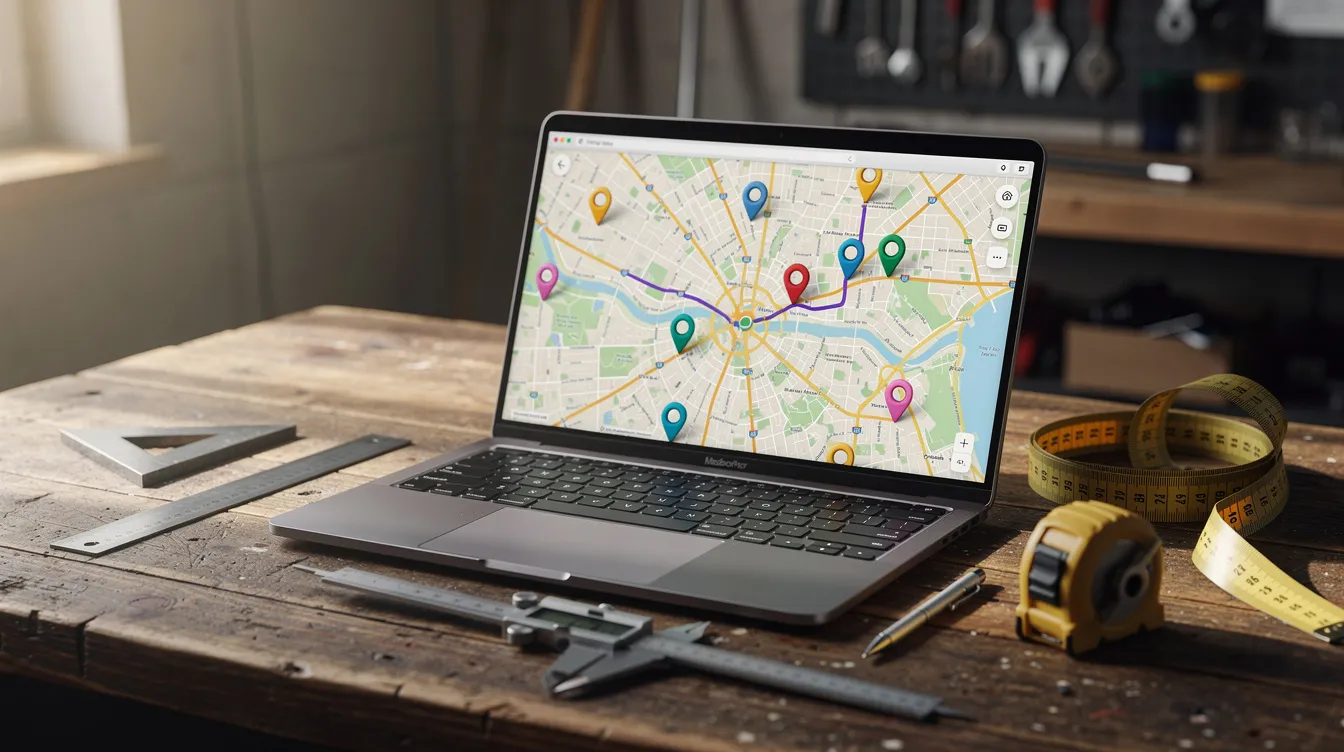
The heatmap view is the contractor-friendly feature. You can see where local visibility drops instead of guessing from one search at the office. That helps decide where to build stronger location pages, request reviews from specific towns, or update citations.
Possible Limitations
- Limited website SEO features compared to broader platforms
- Requires separate tools for content optimization
BrightLocal is strong for local search results and citations but will not replace on-page SEO, content planning, backlink analysis, or technical website work.
4. Moz Local
Moz Local is a clean choice for contractors who want listing management without a complicated operating system. It focuses on distributing accurate business information and catching duplicate listings.
Why It Stands Out
Moz Local is useful when your immediate problem is accuracy across business directories, Apple Maps, and data providers. If your business details are inconsistent, local search rankings can suffer before content even has a chance to work.
Best For
Contractors who want simple listing management without technical complexity. This fits a contractor who wants a clean baseline: correct business name, phone, categories, service area, and fewer duplicate listings.
Key Strengths
- One-click listing distribution
- Duplicate listing detection and cleanup
- Review monitoring and response features
Online reviews are a critical component of local SEO, providing social proof and validating expertise. Encouraging customers to leave reviews and responding to them can significantly improve online reputation and local SEO performance. The volume, recency, and sentiment of reviews directly impact visibility in local search results.
Possible Limitations
- Limited keyword tracking capabilities
- Fewer integrations compared to enterprise platforms
Moz Local is good for listing hygiene. It is less complete if you need detailed geo-grid tracking, competitor map analysis, or a full content workflow.
5. Yext
Yext is built for scale. For a contractor with many branches, franchise locations, or regional offices, it gives more control over listings, directories, data, reviews, and structured information.
Why It Stands Out
Yext's major strength is distribution. Its network covers more than 200 publishers and platforms, which is useful when brand consistency matters across maps, apps, directories, and assistant-style search experiences. You can review Yext's own offering on its product packages page.
Best For
Large contractor companies with multiple locations and high-volume listing needs. If you have dispatch offices across provinces, separate divisions, or franchise partners, Yext can keep business details aligned at scale. For a single-location contractor, it is usually more system than you need.
Key Strengths
- PowerListings network with 200+ directories
- AI-powered review response suggestions
- Advanced analytics and reporting dashboards
Yext is also well-suited to AI-answer visibility because it treats business information as structured data reusable across platforms. Incorporating structured data and schema markup into your website helps Google understand business details better, potentially increasing clickthrough rate. Google's structured data documentation is worth reviewing if your website team manages schema directly.
Possible Limitations
- Enterprise pricing may be too high for smaller contractors
- Complex setup process requiring dedicated management
Yext needs ownership. Someone has to manage fields, approvals, reviews, users, and reporting. Without that, the cost can outrun the value.
Quick Comparison: Best Local SEO Tools for Contractors
| Tool | Best fit | Practical contractor use |
|---|---|---|
| Google Business Profile Manager | Contractors starting with local SEO on a zero budget | Set the foundation for Google Search, Google Maps, business hours, reviews, photos, services, and local pack visibility |
| Semrush Local | Contractors wanting comprehensive local SEO management | Connect local search tracking with general SEO, keyword research, competitors, and organic search results |
| BrightLocal | Contractors focused on citation cleanup and competitor analysis | Audit local citations, track local SERPs, and see visibility gaps across a service area |
| Moz Local | Contractors who want simple, automated listing management | Keep business directories, local listings, and core business details consistent |
| Yext | Large contractor companies with enterprise-level needs | Manage large-scale listings, structured data, analytics, and review workflows |
A practical note: 72% of consumers use Google for local business information (SOCi Consumer Behavior Index, 2024), driving targeted traffic more likely to convert into customers. Your Google Business Profile and local search presence deserve first attention before any paid tool.
How to Choose the Right Local SEO Tool
Choose Based on Business Size
Start with the number of locations and service areas you need to manage. A one-office contractor serving three nearby cities needs different tooling than a regional HVAC company with 18 branches.
Your website must clearly indicate that you are a local business - include your address, neighbourhood, opening hours, and local phone number on your homepage. If basic information is hidden, search engines and customers search harder than they should.
For companies with more than one location, build proper location pages. Each page should explain the local services offered, the area served, project examples, and common customer needs in that city. Thin copied pages with swapped city names rarely hold up in competitive local search.
Choose Based on Technical Expertise
If your team has no one responsible for SEO, choose automation first. Moz Local or Google Business Profile Manager may be enough to clean up local listings and keep basic information accurate.
If you have a marketing manager or agency support, tools like BrightLocal and Semrush create better decisions. They show where you rank, what local competition is doing, and which web pages need improvement.
Google Search Console should still be part of the stack regardless. It shows which queries, pages, and search results bring traffic to your website and helps separate website issues from listing issues. Google provides the tool directly at Google Search Console.
Choose Based on Specific Contractor Needs
Service-area contractors need more than generic visibility. A roofing company may want calls from five nearby towns, while a renovation company may only want larger jobs from specific neighbourhoods.
Localized content about local events and community issues helps build connection to the community. Collaborating with nearby businesses or sponsoring local charities can earn high-quality local backlinks - unstructured mentions that prove you are active in the local community.
Your tool should also support reviews. Review management is an important ranking factor because reputation affects clicks, calls, and trust. A steady system for encouraging customers to leave honest reviews after completed jobs will usually outperform a random review push once a year.
Which Option Is Best for You?
Choose Google Business Profile Manager if you're just starting local SEO and want free basic visibility. Fix categories, services, photos, business hours, reviews, and posts before paying for anything else.
Choose Semrush Local if you need comprehensive local SEO tracking and management for multiple locations. It is strongest when you want keyword research, competitor tracking, and local search data in one workflow.
Choose BrightLocal if you prioritize detailed local competition analysis and citation management. It is especially useful when you need to see why one town performs well and another does not.
Choose Moz Local if you want simple, automated listing management without complexity. It is a good fit when your main issue is inconsistent local business listings across online directories.
Choose Yext if you're a large contractor company requiring enterprise-level listing distribution across many publishers, locations, and teams.

Final Thoughts
The best local SEO tools help contractors turn relevant local searches into qualified calls instead of relying only on referrals or paid ads. The tool matters, but the system matters more: accurate listings, active Google Business Profile optimization, strong location pages, fast mobile pages, consistent reviews, and clear service-area content.
If you're asking why local SEO still deserves budget in 2026, look at how customers buy contractor services now. They search on mobile, compare reviews, check maps, scan photos, visit your site, and call the business that looks credible and close enough to help.
Northline builds these systems for established Canadian contractors who want more customers from organic search instead of another disconnected marketing tool. If your website, reviews, and local listings are working in separate directions, let's chat.